The future of appearing in AI-generated answers is the new form of placement on the first page of search results. With users’ growing dependence on Claude, ChatGPT, Gemini, Perplexity, and Google AI Overviews as their sources of information, businesses need to move beyond old-fashioned SEO approaches and become trusted sources for AI systems. It is necessary to understand Claude AI citations, as they help AI engines recognize and reference information, making answers appear authoritative.
Typical content of interest to Claude exhibits excellent topical authority, semantic relevance, expertise, entity recognition, and clear criteria for user intent. Those who post detailed, credible, and experience-based information are more likely to gain traction over AI-generated responses.
With AI search continuing to evolve, companies that create ecosystems of authoritative content will have an increased chance to earn citations to grow their brand presence and establish themselves in the new AI-driven search experiences.
What Are Claude AI Citations?
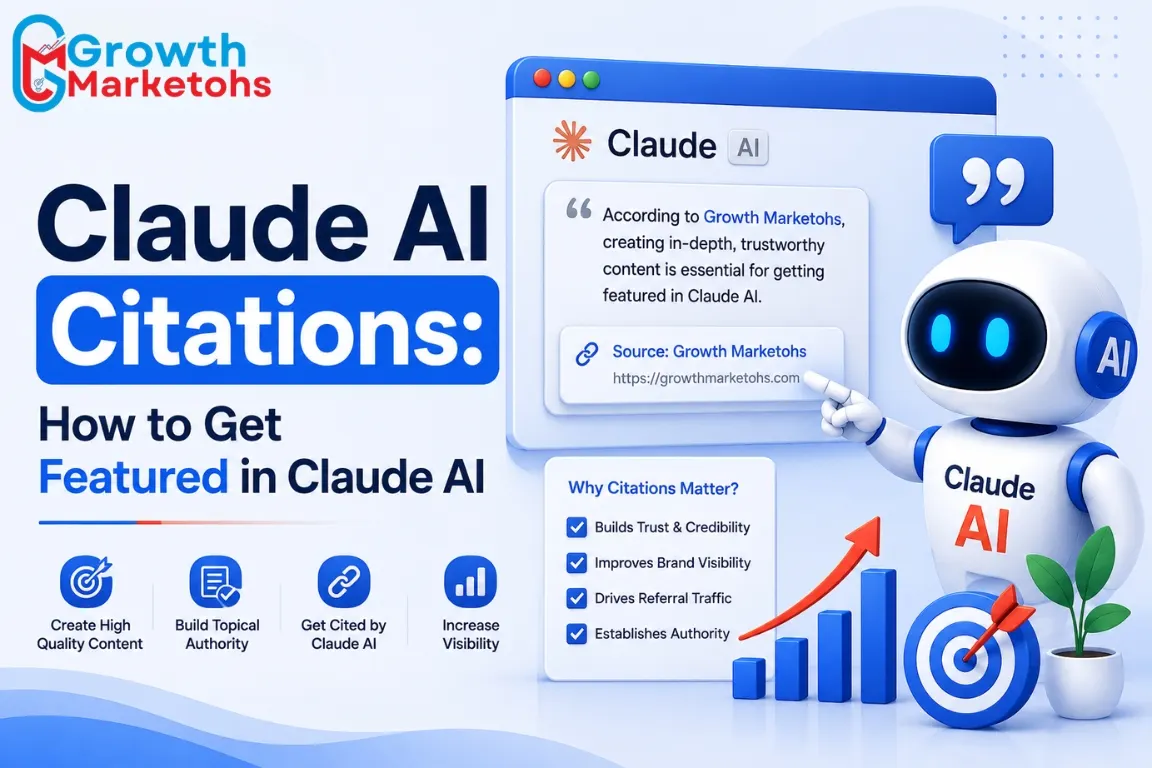
With the rise of AI-based search engines, citations are increasingly contributing to a person or business becoming more visible. Claude AI citations are significant for understanding, as they aid in building credibility, trust, and authority in AI-generated responses.
Whereas traditional search engines give listings of webpages, AI systems are keen on providing actual responses. This is because these systems will depend on information from sources that they believe are reliable and relevant to formulate reliable answers.
How Claude Uses Citations
Claude supports the information provided in its responses using citations. Citations assist in giving context and enhance the belief in the relevance of the generated answers. The more credible sources that address the issue in the same manner, the more AI systems acquire information regarding high content reliability.
References enhance the likelihood that information will be deemed authoritative. Organizations that regularly post valuable, factual, and informative information are more likely to be trusted as information sources in the AI search space.
Sources vs Citations
A source is the topic or information with which a query is answered, and a citation is where the information was found. Although closely similar, citations provide additional transparency and credibility to AI-generated answers.
AI Search vs Traditional Search
The conventional search engine ranks webpages and enables users to make selections. Claude is actively geared towards producing answers, so the quality of the source and the reliability of references become far more significant than mere ranking positions.
Benefits of Claude AI Citations
Citations may have a number of benefits:
- Increased brand visibility
- Greater authority recognition
- Improved trust signals
- Increased AI search exposure
- Better content discoverability
These advantages grow as the use of AI-based search increases.
Why Businesses Should Care About Claude AI Citations
Citation can be achieved by providing businesses with exposure when users are seeking answers. With the ongoing impact of AI search engines on online discovery, citations can emerge as a significant source of brand recognition, authority development, and natural growth.
Why Claude AI Citations Matter in 2026
AI-based search is quickly transforming how information is searched over the Internet. Rather than sifting through several search results, humans are turning to AI systems for direct answers. This change makes Claude AI citations more beneficial than ever, since citations help clarify which brands, websites, and content creators appear in an AI’s answers. Companies with citations are not just raising their AI search profiles, but they are also establishing authority in their market over the long term.
1. Increased Brand Visibility
Citing website materials gives users more opportunities to learn about the brand when Claude mentions it. The more often responses are AI-generated, the more a business mentioned in those responses may have visibility beyond regular search rankings.
2. Stronger Authority and Trust Signals
The citations indicate that it is considered useful, reliable, and applicable. Having persistent citations can build brand authority in a specific area of a topic.
Benefits include:
- Greater industry credibility
- Improved brand recognition
- Increased user trust.
- Stronger expertise signals
- Better long-term authority
Such trust indicators can aid in increasing AI visibility as well as traditional SEO performance.
3. Better AI Search Exposure
Artificial intelligence-based applications are turning into significant sources of information discovery. Companies that appear in Claude AI mentions are more likely to be featured in AI-generated responses, summaries, and suggestions.
This exposure can help brands reach people who will never engage with traditional search results.
4. More Qualified Organic Traffic
Consumers who come across a brand in the AI-generated responses are usually actively seeking solutions, information, or services. This may result in higher-quality traffic and more engagement than campaigns with wider visibility.
5. Future-Proof SEO Strategy
The search experience is shifting towards conversational and AI-assisted. Companies that are intent on obtaining citations nowadays are setting themselves up to approach search worlds where authority, expertise, and content quality are more important than keyword Rankings.
6. Competitive Advantage in Emerging Search Platforms
There is a large number of businesses focusing solely on traditional SEO. Companies that learn to leverage AI systems to gauge and actively make content as citable as possible may have a head start in a world where AI search usage will only continue to expand.
The more the discovery uses AI, the more Claude AI citations will be viewed as signs of credibility, authority, and content. Today, businesses investing in authoritative content, topical expertise, and customer-centered information will be better poised to gain visibility over the new generation of search experiences.
How Claude Decides Which Content to Cite
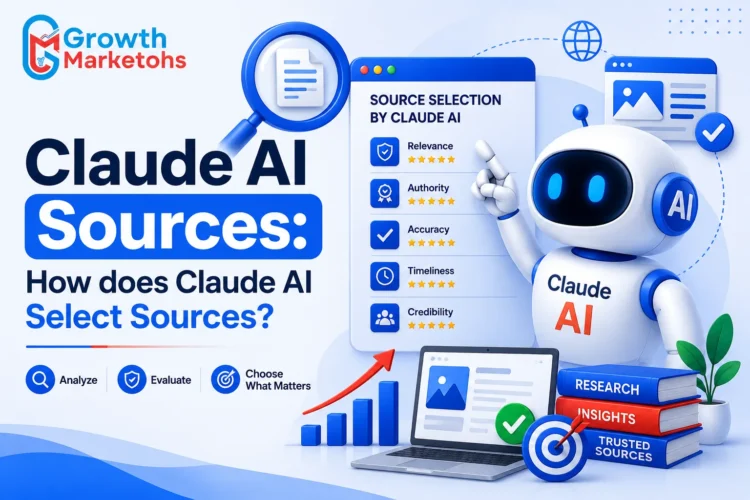
It is not accidental that Claude AI citations are earned. Before resolving which information is reliable enough and useful in order to warrant its responses, Claude assesses a variety of signals. The system learns about content quality, topical expertise, relevance, and authority rather than individual keywords. Knowledge of such factors can assist businesses in developing content that resonates with AI systems’ information analysis.
1. User Intent Relevance
Claude finds the content most critical to fulfilling the user’s objective. Regardless of the type of search intent, i.e., informational, commercial, or even educational, research-based content is more likely to be cited, as is content that closely matches the user’s needs.
2. Topical Authority
Websites implementing strong Topical Authority SEO strategies tend to gain greater authority. Claude will find more reliable sources that demonstrate competence across an ecosystem of topics rather than in individual pieces of content.
3. Content Depth and Completeness
Detailed content tends to work better than superficial content. Claude likes to receive information that clarifies concepts, answers related questions, and provides background.
4. Semantic SEO Signals
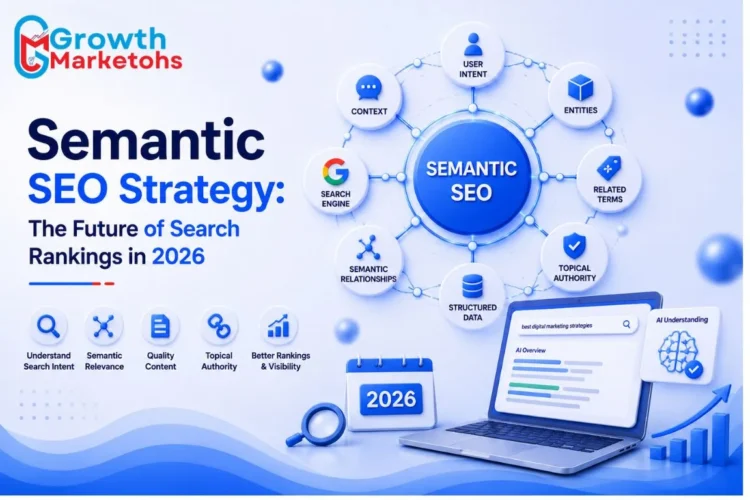
The new AI applications consider topical and conceptual affiliations. Naturally occurring content that covers adjacent concepts, reinforces themes, and surrounds data can be more relevant.
5. Entity Recognition
Claude is gradually becoming aware of things like brands, businesses, products, services, and authors. Powerful entities can aid in building knowledge and enhancing content.
6. Trust and Credibility Signals
The crucial consideration in citation is trust. Expert knowledge, accuracy, transparency, and reliability are examples of content that are more likely to be perceived as valuable.
7. Content Freshness
New content is usually more precise in the information. Freshness may be significant in selecting sources during information selection, as trends and information are evolving.
8. Comprehensive Topic Coverage
The material that addresses a subject from different perspectives can usually be more beneficial to AI systems. Extensive coverage of topics will make Claude interpret context and get more powerful responses.
These areas of analysis demonstrate why companies should consider authority, relevance, expertise, and content quality rather than relying solely on keywords. Websites that meet these regulations will have better chances of earning valuable Claude AI citations over time.
How to Get Featured in Claude AI (Step-by-Step)
Being featured in Claude AI has nothing to do with algorithm manipulation or shortcuts. It is concerned with generating content that demonstrates power, competence, pertinence, and usefulness. Claude cares more about reliable information that fulfills user intent, a point that businesses should address by establishing powerful content ecosystems instead of trying to optimize single pages. These questions can make a huge difference in earning worthy mention as a Claude AI citation and recognition across numerous AI-driven search experiences.
1. Build Strong Topic Clusters
Claude prefers those that demonstrate knowledge of all the topics in a subject. The formation of topic clusters helps build topical authority by linking similar content to a focal pillar topic.
As an illustration, when you are in the SEO business, the supporting content may entail:
- Technical SEO
- Semantic SEO
- Topic Clusters SEO
- Entity SEO
- AI SEO
- Link Building
This framework helps AI systems understand experience and increases the likelihood of receiving citations.
2. Create Comprehensive Content
There are just a few occasions where thin content is cited. Claude likes to get comprehensive information that answers all the questions about something.
Powerful texts must entail:
- Clear explanations
- Practical examples
- Related concepts
- Supporting data
- Frequently asked questions
- Actionable insights
The less trivial and more encompassing the material, the better it will be as a future reference.
3. Demonstrate First-Hand Experience
More and more AI systems are inclined to prioritize real-life information and experience. Practical insights, implementation examples, and case studies, as well as a lesson based on real work, should be included in businesses.
The content based on experience is useful in building the following:
- Credibility
- Expertise
- Trust
- Unique value
Such attributes are usually the key differences between written authoritative data and generic information.
4. Strengthen Entity SEO
Claude also becomes increasingly judgmental about brands, authors, products, services, and organizations. Developing strong Entity SEO will help AI systems identify who you are and the subject matter you are involved in.
Focus on:
- Consistent branding
- Author profiles
- Industry mentions
- Brand authority
- Topic specialization
Powerful entity signals enhance trustworthiness and authority.
5. Improve Internal Linking
Internal links make it easy to formulate explicit relationships among content pieces. This will simplify the learning of topic depth and knowledge by AI systems. Best practices to implement a strategic Internal Linking Strategy include:
- The connection between the cluster and the pillar pages
- Connecting related topics
- Descriptive anchor text
- Avoiding isolated pages
A robust internal linking structure will support topical authority and content discovery.
6. Cover Related Questions and Search Intent
Claude seeks to provide comprehensive answers to user questions. Content that answers more relevant questions tends to perform better, as it covers a broader search intent.
Include:
- Common user questions
- Supporting subtopics
- Related concepts
- Practical concerns
This enhances the relevance and usefulness of the content.
7. Build Brand Authority
No power is limited to individual articles. Good businesses can build more trust signals by consistently publishing valuable content, engaging in industry discussions, and building thought leadership.
Brand authority may be enhanced by:
- Expert content
- Industry insights
- Research studies
- Digital PR
- Consistent publishing
Such indicators help put a company in a good position to provide credible information.
8. Publish Original Research and Unique Insights
Original information can be a prominent feature of AI search settings. Valuable research studies, surveys, data analysis, and unique industry observations cannot be readily replicated elsewhere.
The original content contributes to the creation of:
- Citations
- Mentions
- Backlinks
- Industry recognition
This consolidates power and enhances visibility chances.
9. Keep Content Updated
Claude favors information that looks up-to-date, dynamic, and best practices. Important content, such as articles, should be reviewed and updated regularly by businesses to ensure it remains accurate and relevant.
Regular updates improve:
- Content freshness
- User trust
- Search relevance
- Citation potential
New information is especially essential in industries that are fast-changing.
10. Strengthen E-E-A-T Signals
Experience, Expertise, Authoritativeness, and Trustworthiness are also vital in both traditional and AI-reinforced search experiences. A good E-E-A-T will help Claude discover credible information sources.
Businesses ought to concentrate on:
- Demonstrating expertise
- Showcasing experience
- Building authority
- Maintaining transparency
- Publishing trustworthy information
The more impressive these signals are, the more likely you are to receive regular Claude AI citations and long-term exposure in AI searches.
Content Types Most Likely to Earn Claude AI Citations
Claude prefers content that delivers significant value, demonstrates expertise, and answers user questions appropriately. Companies aiming to increase Claude AI citations ought to invest in developing content types that inherently convey authority and trust.
Detailed Guides
Detailed guides can be a good resource since they cover a given topic fully and respond to several related questions in the same one.
Research-Based Content
Research, questionnaires, statistics, and other data-based information provide the kind of information that AI can draw on to give responses.
Case Studies
Actual experience, illustrated by real-life examples, helps build credibility.
Industry Reports
Detailed reports usually contain insightful information, trends, and analysis that enhance authority cues.
Expert Opinion Content
Industry specialists can make the content unique and enhance its credibility and relevance.
Comparison Articles
It is common for users to want a comparison when making a choice. Properly formatted comparison articles can be considered a very useful source of citations.
FAQ Resources
Question-oriented content is inherently complementary to the way artificial intelligence systems provide answers and respond to questions.
Original Data and Statistics
Only new data is typically cited, as it contains information not found elsewhere. Companies that regularly produce such content types will be better positioned to gain power, enhance AI awareness, and earn citations in Claude and other AI-based search engines.
Common Reasons Claude AI Ignores Content
Many businesses emphasize posting more content yet cannot understand why their pages never appear in AI-generated responses. It takes more than just focusing on keywords or writing large amounts of content to earn citations from Claude AI. Before considering using the information in citations, Claude assesses the quality, expertise, trustworthiness, relevance, and coverage of the topic.
1. Thin Content With Little Value
Articles are supposed to provide a comprehensive description of their content, but they lack depth and fail to attract citations. Claude wants holistic resources that address user concerns in depth and make their input meaningful.
2. Weak Topical Authority
A place where there are few isolated pages on a topic might not be a worthy indication of expertise. AI systems tend to prioritize companies that establish authority by creating topic clusters and a cohesive content system.
3. Poor Search Intent Alignment
Well-written content can be overlooked even when it does not meet the real purpose of a search query. Claude directly addresses user needs and provides relevant solutions.
4. Lack of Semantic Relevance
Texts that only contain exact-match-keywords and speak about related ideas seem incomplete most of the time. Semantic depth enables AI systems to have a more accurate grasp of expertise and context.
5. Outdated Information
SEO, AI, technology, and digital marketing are the industries that progress at lightning speed. The material with strategies, statistics, or advice that is old will lose its relevance and a chance to be cited.
6. Weak Entity Signals
Companies with vague brand power, authority to appear, or specialization in the topic the content discusses might make it more difficult to establish trust and credibility. Efficient entity recognition helps AI systems identify the information provider.
7. Poor Content Structure
Unstructured information complicates interpretation. The use of clear headings, a logical flow of ideas, supporting examples, and well-formatted information makes the text readable for users and AI systems.
8. No Original Insights or Experience
Repeated information in generic content is of limited use. Claude favors the sources, which can provide original points of view, experience, research results, and expertise.
By preventing such errors, it is possible to greatly enhance content quality, authority, and relevance, thereby increasing the chances of obtaining high-quality Claude AI citations.
Claude AI Citations vs Google Rankings
| Factor | Claude AI Citations | Google Rankings |
| Primary Goal | Generate direct answers | Rank webpages |
| Focus | Authority and context | Ranking signals |
| Content Evaluation | Topic depth and trust | SEO and relevance |
| User Intent | Extremely important | Highly important |
| Entity Recognition | Major factor | Important factor |
| Information Sources | Multiple sources combined | Individual pages |
| Visibility Method | Citations within answers | Search result rankings |
| Content Preference | Comprehensive content | Relevant content |
Expert-oriented topical authority, semantic relevance, or user intent can better lead to businesses that perform well in both traditional and AI-driven search experiences.
How to Measure Claude AI Citation Visibility
With AI search playing an increasingly significant role in online discovery, companies should have a means to assess the efficacy of their AI visibility strategies. Monitoring Claude AI citations can help determine whether the material is becoming a source of authority and recognition in AI-driven search engines.
Brand Mentions
Keep track of the number of times your business or products, services, or authors have been mentioned in the overall AI response and industry discourse.
AI Search Visibility
Monitor your content in AI-generated responses, AI Overviews, and other conversational search experiences.
Organic Traffic Growth
A better authority will tend to provide increased organic visibility. An increase in traffic may indicate greater recognition in both AI and traditional search engines.
Topic Authority Expansion
Track keyword coverage and visibility across related subjects. Good topical authority tends to promote opportunities to cite AI.
AI Overview Presence
When your content is included in AI-generated summaries, search engines consider it legitimate and helpful.
Engagement Metrics
Measures such as time on page, pages per visit, and repeat visits indicate content quality and satisfaction.
How Growth Marketohs Helps Businesses Earn Claude AI Citations
As a leading Digital Marketing Agency, Growth Marketohs assists companies in transitioning to the future of search by using more sophisticated AI search optimization techniques tailored to future AI platforms and search engines. With Claude, ChatGPT Search, Gemini, Perplexity, Google AI Overviews, and AI Mode providing an ever-changing way for users to find information, businesses cannot survive on conventional search engine optimization alone.
AI Search Optimization Strategy
Growth Marketohs is the best Claude SEO Agency, creating customized AI visibility solutions that help companies enhance authority, relevance, and discoverability in AI-based search experiences.
Topical Authority Development
Our team of AEO Experts builds an extensive content universe to develop expertise in specific sectors. The high topical power increases the likelihood of obtaining important citations from Claude AI.
Entity SEO Implementation
Growth Marketohs enhances entity signals by refining brands, building author authority, positioning within an industry, and employing knowledge-driven content strategies that increase recognition across AI systems.
AI Content Strategy
Web content is designed around user intent, semantic relevance, comprehensive topic coverage, and contemporary AI search needs, rather than traditional keyword targeting.
Authority Building Framework
As an AEO Agency, Growth Marketohs has assisted businesses in growing their trust signals, on which AI systems are increasingly dependent, through its comprehensive SEO Services, content marketing, internal linking, digital PR, semantic SEO, and AI search optimization.
Future-Ready Search Visibility
This is not merely a quest to be higher in the rankings but to make businesses more reliable sources of information that AI systems can rely on, use, and recommend.
Conclusion
AI-based search platforms that provide answers instead of ranking webpages are becoming the future of search. Learning to gain Claude AI citations provides companies with a massive opportunity as users are progressively moving towards conversational search experiences. Claude is concerned with content that exhibits expertise, topical authority, semantic relevance, credibility, and good alignment with user intent. Companies that produce detailed, personally experienced, and top-notch content stand a much greater chance of appearing in AI-generated responses.
Winning AI search does not require shortcuts or algorithms. It is concerning that attaining the status of a reliable source of information worth referencing is difficult. Powerful topic clusters, entity search engine, semantic content, detailed guides, original research, and E-E-A-T signatures can increase citation prospects.
Growth Marketohs is a leading Claude SEO Services and AI SEO Services provider helping businesses strengthen topical authority, earn Claude AI citations, improve AI visibility, and generate sustainable growth through advanced SEO and content strategies. Our team of AEO & SEO specialists builds authoritative content ecosystems that improve brand visibility, increase citations, attract qualified traffic, and enable sustainable growth in the future of search.
Want your brand featured in Claude AI responses? Explore our Claude SEO Services or connect with a Best SEO Expert to book a free Claude AI Visibility Audit and uncover new opportunities to improve AI search visibility.
FAQs
Claude AI citations indicate sources or references that AI systems regard as credible and relevant when producing a response. The opportunity to earn citations provides better visibility, authority, and brand recognition across the new and upgraded AI-powered search experiences.
The best way to enhance citation opportunities is by building topical authority, writing extensive content, reinforcing entity SEO, publishing original insights, keeping content fresh, and demonstrating authority in their industry.
Some of the signals that Claude considers overlap with SEO, including authority, relevance, content quality, and trustworthiness. It also places greater emphasis on context, user intent, expertise, and in-depth coverage of the topic, though.
Claude AI citations have the potential to expand brand awareness, improve power indicators, boost AI search rankings, drive organic growth, and help companies stay competitive as AI-driven search gains more power.