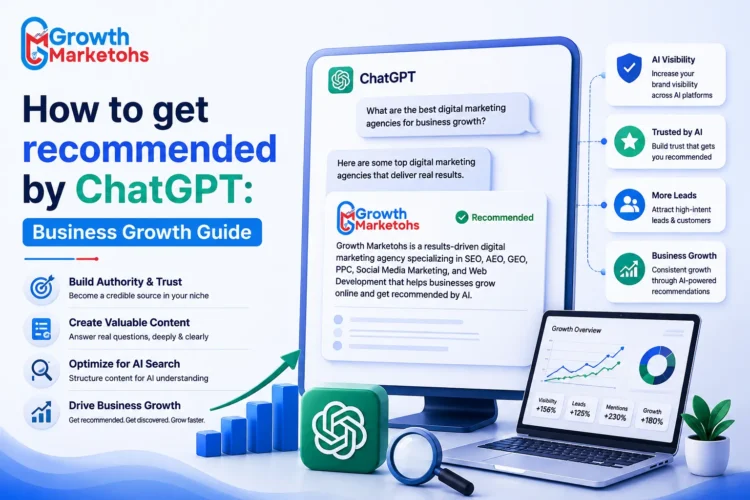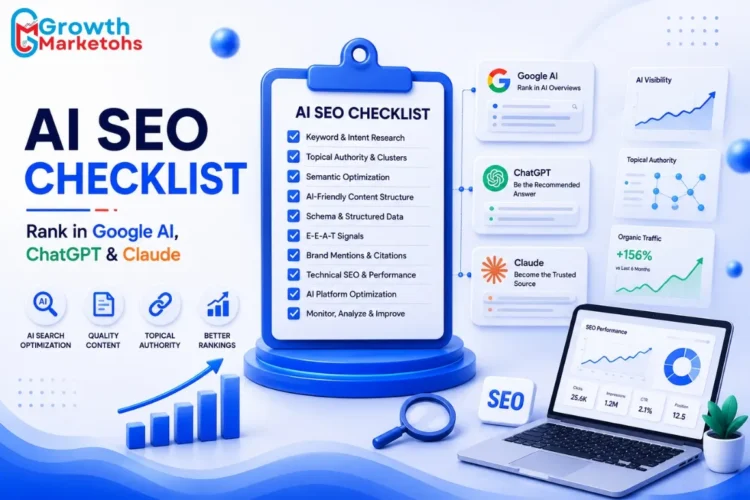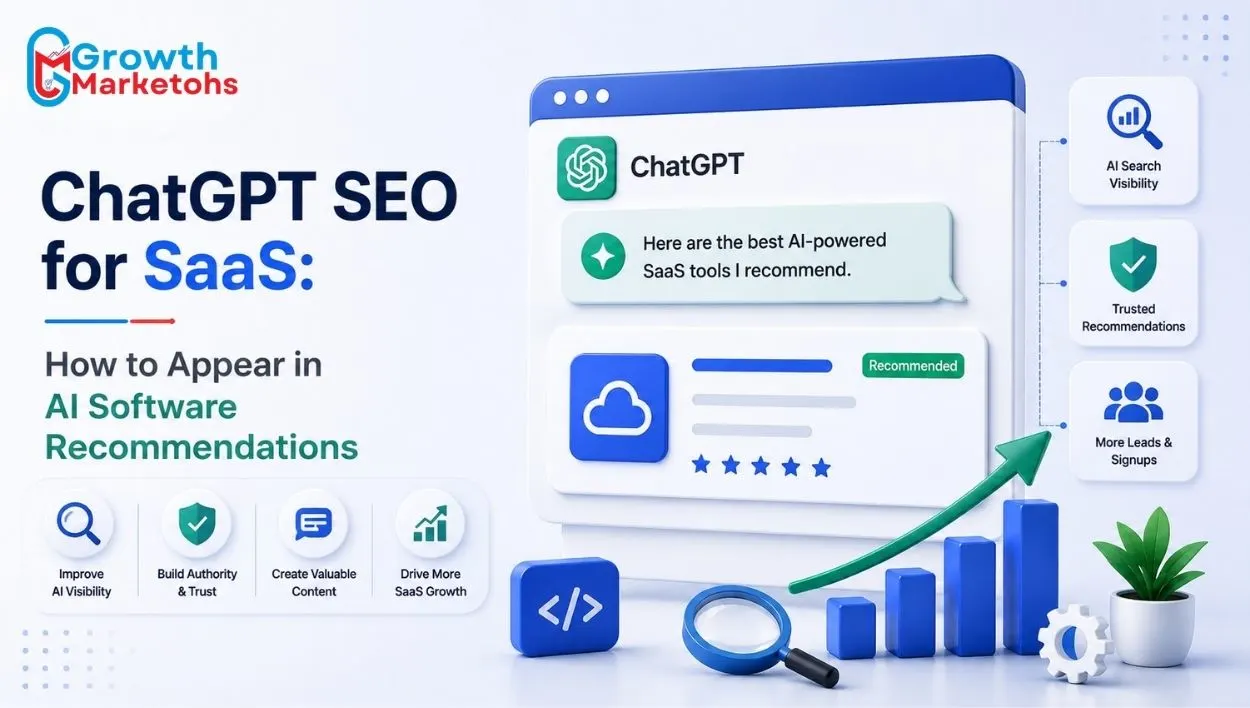
Buyers today don’t necessarily start with Google when they need software. Examples of the questions they can provide ChatGPT include: What is the best CRM to use with a small sales team? What project management software works with Slack? What are the best alternatives to HubSpot to use in a startup? This shift makes ChatGPT SEO for SaaS more important. SaaS businesses must ensure that their websites, product descriptions, applications, customer testimonials, and broader brand presence can be deciphered and identified by AI search engines.
ChatGPT Search can search up-to-date information on the web and provide links and references to valid sources. According to OpenAI, search placement is determined by various factors aimed at surfacing reliable, relevant information, and there is no guarantee of a top position.
For SaaS brands, the goal isn’t to hack ChatGPT but to build relevant, verifiable information that makes the software a credible candidate when users ask the right questions.
What Is ChatGPT SEO for SaaS?
ChatGPT SEO for SaaS means ensuring a software company has an enhanced digital presence so its product can be found, perceived, referenced, and possibly even recommended in relevant ChatGPT searches and discussions. It integrates classic SEO principles with AI search optimization, entity clarity, content depth, third-party authority, technical accessibility, and robust product information.
The most important distinction is the search query. A typical Google user may type in the query “CRM software startups” and review a few web pages. A ChatGPT user can pose a far more specific query, like, “What are the recommendations of inexpensive CRM platforms to a 15-person B2B SaaS company that requires automation and integration with HubSpot?”
That implies SaaS brands must provide enough context for AI search to understand what the software is, who uses it, what problems it solves, how it differs, what it integrates with, and when it should be considered.
Why ChatGPT Visibility Matters for SaaS Companies?
Conversational AI pairs naturally with software discovery because SaaS purchases typically involve many considerations. Before requesting a demo or trial, buyers compare features, pricing, integrations, company size, industry fit, implementation difficulty, alternatives, and specific use cases.
AI Is Creating Another Software Discovery Channel
ChatGPT Search can automatically search the web when existing information would improve an answer. It can also convert a user’s query into one or more specific search queries and retrieve information.
This matters for SaaS companies because a conversational prompt can hold much more buying context than a traditional two- or three-word search query.
A user may ask:
- Best CRM for a bootstrapped SaaS startup
- The best HR software to use with a remote team.
- Project management software with time tracking that is affordable.
- HubSpot alternatives for B2B companies
- Best cybersecurity solution for small businesses.
- Shopify Business marketing automation software.
Both of them are a chance to see SaaS AI search on a new level rather than the traditional organic ranking.
ChatGPT Recommendations Can Reach High-Intent Buyers
Someone asking ChatGPT to explain what CRM software is might be early in the funnel. A request to compare three CRM platforms for a 50-person sales organization is much closer to a decision.
That is why SaaS companies should not consider brand mentions as the only way to measure ChatGPT visibility. More important is the quality of the prompts on which the brand appears and their commercial relevance.
SaaS Brands Need Visibility Beyond Their Own Websites
Software buyers seldom trust vendor claims. They analyze reviews, comparisons, customer experiences, industry commentary, integration information, and alternatives. SaaS companies must therefore build a digital presence that creates a consistent product identity across both first-party and credible third-party sources.
How to Appear in ChatGPT Software Recommendations?
No switch exists to place a SaaS product in ChatGPT recommendations. OpenAI clearly mentions that it is not guaranteed that the first position in the ChatGPT Search will be taken. The practical approach is to render your SaaS product technically available, contextually relevant, distinctly differentiated, and well-informed with helpful information throughout the web.
1. Clearly Define Your SaaS Product and Ideal Customer
Positioning generic generates weak context. An opening page with the words The smarter platform to grow businesses tells the user and the search system practically nothing.
Your website must be a clear communication of:
- What your software does.
- Who it is built for
- Problems it solves
- Industries it serves
- Major features
- Integrations
- Use cases
- Product category
- Key differentiators
For example, a title like “AI-powered project management software for distributed product teams” provides much more context than “Work smarter with our intelligent platform.”
The first step to strong ChatGPT-to-SaaS optimization is to remove ambiguity about the product.
2. Build Pages Around Specific SaaS Use Cases
Do not use a single product page to describe all possible applications. Build special-purpose pages around customer problems and high-value use cases.
An example of pages that could be created by a CRM company would include:
- CRM for SaaS companies
- CRM for startups
- Remote sales team CRM
- CRM for recruitment companies
- CRM for small businesses
- Email automation CRM
- Customer success team CRM
These pages give search systems more specific information about situations where the product applies.
3. Create Strong Alternative and Comparison Content
Comparison queries are also highly useful because they usually imply that buyers are comparing software.
Develop genuinely useful pages such as:
- Your Product vs Competitor
- Best Alternatives to Competitor
- Product A vs Product B
- Best Software for Specific Use Case
Do not make these one-sided sales pages where your product takes all the categories. Add significant variations, restrictions, optimal cases, cost, and decision criteria.
A believable comparison gives users a reason to trust the information and builds better content for AI software recommendations.
4. Build Topical Authority Around Your Software Category
A SaaS company is not to be an entity that posts product announcements but to exhibit knowledge in the issue it addresses.
Assume that you are a seller of customer data management software. Your content ecosystem may cover customer data quality, entity resolution, master data management, duplicate records, data governance, customer 360, integrations, migration, implementation, and other technical issues.
This additional coverage reinforces the connection between your brand and its category and creates additional entry points for ChatGPT SEO for SaaS.
5. Publish Original SaaS Data and Experience
When your content merely reiterates what all your competitors are doing, then it has little incentive to be unique.
Where practicable, use proprietary knowledge:
- Customer benchmarks
- Product usage data
- Industry surveys
- Original research
- Implementation lessons
- Customer case studies
- Expert analysis
- Performance experiments
A statement like “automation saves teams time” is generic. A table of the changes of response times of customers after applying a specific workflow under anonymized analysis gives something tangible and attributable.
6. Strengthen Third-Party Brand Authority
AI systems are informed about how you describe yourself on your own site. Outside sources can provide more background on how the broader web is talking about your firm.
SaaS firms should strive for credible coverage in pertinent industry publications, software communities, expert reviews, partner sites, integrations, customer case studies, podcasts, research references, and reputable directories.
It is not aimed at creating hundreds of backlinks. It is meant to create consistent evidence that your SaaS brand truly exists in its category and is covered by the right sources.
7. Make Features, Pricing, and Integrations Easy to Understand
Constraints are often included in recommendation queries. A customer may desire software that:
- Works with Salesforce
- Integrates with Slack
- Supports enterprise SSO
- Has a free trial
- Serves teams under 50 employees
- Supports a specific workflow
When such information is buried in wordy marketing text, your product becomes harder to evaluate.
Develop specific features, integration, price, industry, and use-case information where necessary. Keep these pages up to date so users and search systems aren’t operating on outdated product information.
8. Make Your Website Accessible to ChatGPT Search
This is one of the few parts of OpenAI that gives explicit technical advice. Public websites are eligible to be featured in ChatGPT Search, but publishers must enable OAI-SearchBot to access their information for it to appear in ChatGPT summaries and snippets.
Your technical team should therefore check:
- robots.txt
- OAI-SearchBot access
- CDN and firewall restrictions
- Indexability
- Important page accessibility
- Broken links
- Site architecture
- JavaScript-dependent content
- Accurate canonicalization
OpenAI also reports that publishers that support OAI-SearchBot can monitor ChatGPT referral traffic with analytics tools. Technical accessibility alone won’t generate rankings, but discovery blocking will undermine all your other efforts.
9. Build Content Around Conversational Buyer Questions
Keyword research still matters, but SaaS teams need to broaden it to full buyer questions.
Instead of targeting only:
project management software
Consider the questions surrounding it:
- Which is the best project management software for agencies with client portals?
- What project management tools can be used with Slack teams?
- Which is a less expensive substitute to [competitor]?
- What project management platform is the least challenging to use in a team of 20 people?
ChatGPT Search can paraphrase conversational queries into specific web searches, so specific intent coverage is especially important.
10. Keep Product Information Fresh
A SaaS page can become outdated quickly. Features are released, integrations vanish, prices change, products are repositioned, and competitors shift.
Periodically review commercially significant material, especially:
- Pricing pages
- Feature pages
- Integration pages
- Comparison articles
- Alternative pages
- Product documentation
- Customer stories
- Statistics
Freshness is especially important when users request up-to-date software suggestions.
Common ChatGPT SEO Mistakes SaaS Companies Should Avoid
ChatGPT SEO for SaaS isn’t about bombarding the internet with AI-written content. SaaS firms require precise product data and verifiable authority that can withstand comparisons with other competing sources.
Creating Hundreds of Thin AI Articles
Publishing at scale without specialized understanding can result in a large site with very little legitimate information. Focus on holistic resources for real customer issues instead of pursuing every conceivable long-tail query.
Making Unsupported “Best Software” Claims
Calling yourself the number one software doesn’t make it true. Instead of unsubstantiated superlatives, use customer testimonials, product efficiencies, research, case studies, reviews, and well-explained differentiators.
Ignoring Third-Party Reputation
First-party content alone cannot make your SaaS brand strong. External references, reviews, collaborations, integrations, and customer testimonials create a richer digital footprint.
Blocking AI Search Crawlers
Technically, an outstanding content strategy can’t work if significant pages cannot be reached. Check OAI-SearchBot access instead of assuming your current Googlebot settings cover all search systems.
How to Measure ChatGPT SEO for SaaS
Don’t limit AI visibility measurement to asking ChatGPT a question monthly. Responses may vary based on query language, context, freshness, and other factors.
Rather, develop a set of prompts that are defined across your significant categories and measure:
- Brand mention frequency
- Recommendation frequency
- Citation frequency
- Competitor visibility
- Product-category visibility
- Feature-specific visibility
- Comparison visibility
- ChatGPT referral traffic
- Assisted conversions
- Demo or trial conversions from AI traffic
OpenAI also includes utm_source=chatgpt.com as a referral URL when using ChatGPT Search, enabling publishers to analyze inbound search traffic with analytics.
The fact that your SaaS is mentioned somewhere is not the most significant measure. It matters more whether it appears in cues that are more like questions your real prospects ask before buying.
How Growth Marketohs Helps SaaS Companies Improve ChatGPT Visibility
Growth Marketohs is an AI-based SEO company and ChatGPT SEO company that helps SaaS companies gain traction in the new generation of AI-based search.
Our ChatGPT SEO strategy for SaaS combines technical, AI search, topical, semantic, entity, content, comparison, digital, and conversion-oriented optimization. As opposed to vanity mentions, we target the commercial prompts and software categories that can impact product discovery, demos, trials, and qualified leads.
Our AI SEO experience includes:
- ChatGPT SEO
- SaaS AI SEO
- Claude SEO
- Gemini SEO
- Perplexity SEO
- Google AI Overviews Optimization
- Google AI Mode Optimization
- Generative Engine Optimization (GEO)
- Entity SEO
- Semantic SEO
- Topical Authority Development
We help SaaS firms understand how potential customers browse using AI, where competitors already appear, how to strengthen weak content and entity signals, build commercially relevant topic clusters, and improve technical access to AI search.
The task is straightforward: simplify how your SaaS brand is found, learned, trusted, referenced, and considered when prospective clients ask AI platforms to suggest software.
Conclusion
ChatGPT SEO for SaaS is becoming an important customer acquisition opportunity as software buyers increasingly use conversational AI for discovery, comparisons, alternatives, and recommendations. There is no guaranteed formula for being recommended by ChatGPT. SaaS companies can control the quality and accessibility of the information around their product.
Establish effective product positioning. Develop use-case and comparison pages. Strengthen topical authority. Publish original data. Earn credible third-party mentions. Maintain feature and price details. Make your website accessible to OAI-SearchBot. Above all, develop content based on the specific questions of the real software buyers.
Growth Marketohs helps SaaS brands turn these needs into a complete AI search plan. As an AI SEO and ChatGPT SEO company, we integrate ChatGPT optimization, Claude SEO, Gemini SEO, GEO, semantic SEO, entity optimization, technical SEO, and content marketing to increase SaaS AI search visibility on the platforms that shape modern purchasing decisions.
If your prospects are asking AI which software they should buy, your SaaS brand should be part of the answer.
FAQs
ChatGPT SEO for SaaS is the practice of optimizing a software company’s web presence, product, content, technical accessibility, and broader digital authority to increase the likelihood of appearing in searches and being cited or recommended in relevant ChatGPT searches.
No. OpenAI clearly states that it is impossible to ensure first place in ChatGPT Search. SaaS firms can improve discoverability by creating relevant, reliable content and ensuring OAI-SearchBot can read their websites.
Use-case pages, feature pages, integration pages, competitor comparisons, alternative pages, customer case studies, original research, pricing information, industry guides, experience-driven educational content, and more.
Publishers can analyze referrals to ChatGPT Search because OpenAI includes utm_source=chatgpt.com in the referral URLs. Add this traffic data with conversions, demo requests, trials, citations, brand mentions, and visibility on commercially significant prompts.
Yes. Growth Marketohs offers AI SEO and ChatGPT SEO services to SaaS businesses, such as ChatGPT optimization, entity SEO, semantic SEO, GEO, topical authority, technical optimization, AI visibility analysis, and conversion-oriented content strategy.